Introduction: Process, Structure, Tensions
Last year, we experimented with the working structure of Working groups. We formed six working groups with different projects and focus points, including Lumbung Club, Pedagogy (cocos), Printing and Publishing, Land, Archive/ Documentary, and Economy (DAME DAME)
During the three-day-long Majalis of reflection and check-out of Harvest Festival, we realized that the second year educational program would have three intense two-week programs in-person, and Majalis and self-organized times during the year. The idea was that this year we would be more involved in planning the education based on our needs, so three working groups were responsible for developing the program of the first intensive, and the rest three working groups would be responsible for the second intensive.
During the summer, based on priorities, the three working groups of Economy, Archive and Printing and Publishing, alongside the tutorial collective, developed the plan for the first intensive.
The process involved each working group and tutorial collective proposing their own questions and topics. We then aimed to identify a shared purpose or topic to reflect on and connect the entire program to it. Since we were writing a proposal to DOEN foundation on behalf of the economy working group, and we framed the proposal with the concept of “distribution based on equity, not equality,” we discussed that this topic can be our shared concept, although each working group continued to develop their initial ideas.
It is worth mentioning that two tensions happened in the process:
The first one that happened in Archive WG was around communication issues, we were developing the program during the summer, and the communication with the rest of members did not go well, and they felt they were left behind. questions related to this situation is:
- How can we involve others and keep communicating with them while they have less free time to join the program?
- When we cant reach out to other members, is it fine that the person who has time and energy at that moment, continue the work? how we can develop trust?
The second one was related to the time that we tried to think of a way to collaborate the three working groups in the topic of equity, and some working groups already developed their plan and did not relate to this way of working or collaborating. the question in relation to this is:
- How can we think of methodologies of collaborating that can be inclusive and open?
- What is the healthy way to communicate and address conflicts within the group?
With this brief of the process, now we can go to the Harvest of the 1st Intensive Program!
Check-in! How to make our new room a living space for new year?
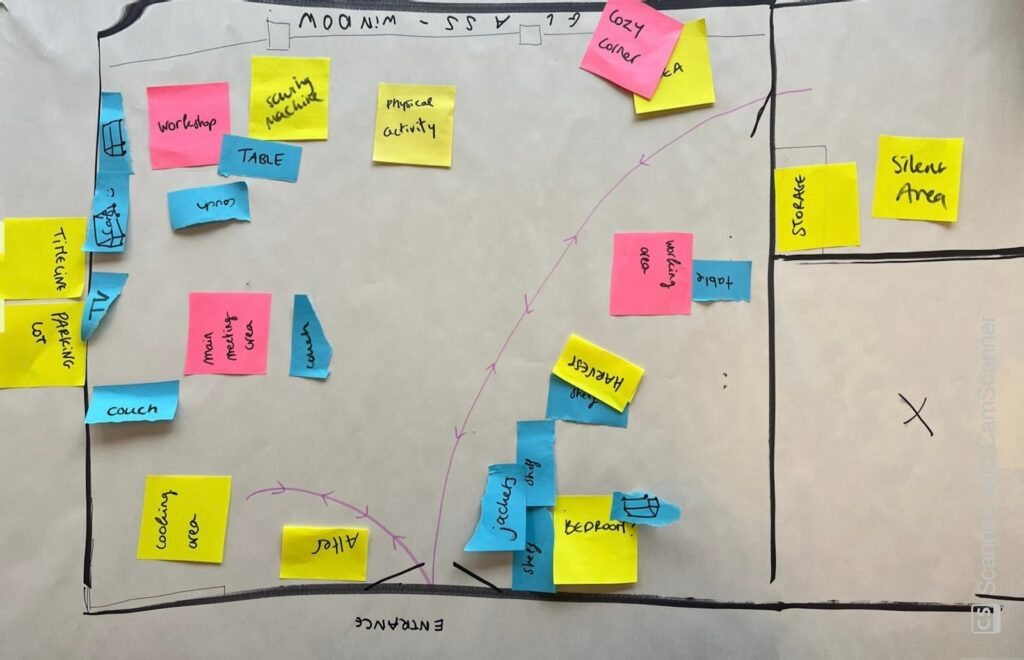
We started the first day by reflecting on our new space, which was previously home to Planetary Poetics. We focused on the question: what do we want from this space, as it will be our shared living environment for the next year? We split into groups, some prepared for a launch event, others cleaned up the dishes and remnants from the summer’s Mouse Fest, some organized the archives, and others considered how to arrange the furniture.
After one month! Reflections and Adjustments
We explored the idea of dividing the space. we have lived in the room for about a month, the question was How is it functioning? Is it addressing the needs identified during check-in?
Some people gathered and made a new way of arranging things!
How to redistribute the access within a translocal collective? Practices of Archiving with Care
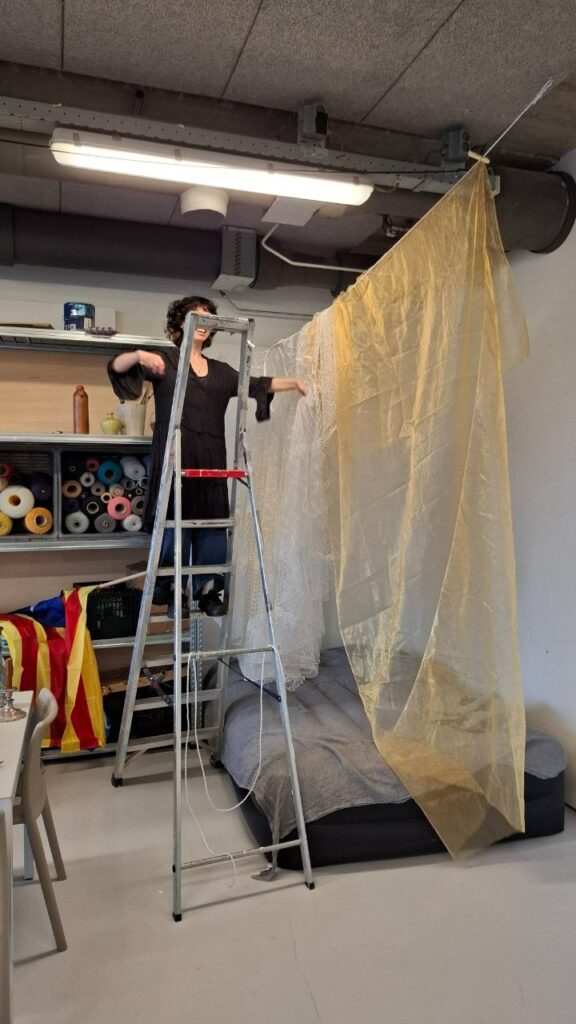
Archive WG had this question of how to harvest more effectively in terms of access, Usage (activation), and risk. We tried to explore what protocols are needed, and the methodology was to design a workshop so damdam people go through their own harvests of the last year to see who they perceive them and what are the limits.
Archive Gossip:One funny thing that happened was during our discussions about whom to invite. We decided we needed someone to help us organize, and we thought of Lila. In our first meeting, she expressed some confusion, saying, “My work focuses more on economics and the redistribution of labor, but you invited me for Archive.” We joked that in collectives, all of these aspects are interdependent. However, it was encouraging to consider access as a form of redistribution, which prompted us to reframe the workshop based on this idea.
Lila’s Practice: organizing “Cultural Workers Unite” in Rotterdam during Covid
related to Lila’s experience with economy and redistributing resources, she allocated the first day to give a one hour talk about her experiences and activities, specially she shared about her practice of organzing the “Cultural workers Unite” for the precarious cultural workers.
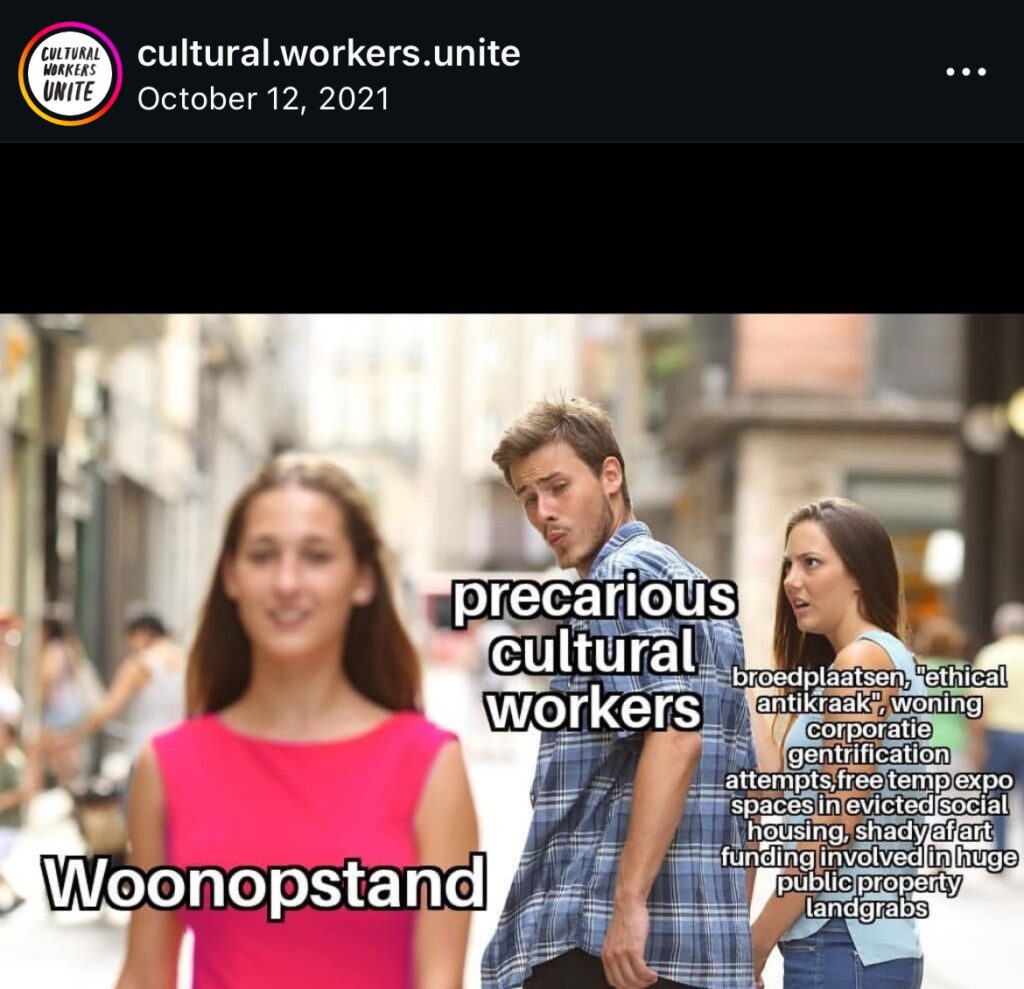
they tried to include not only artists and cultural workers but also more invisible workers of the cultural institutions such as the hosts and the people who their job was cleaning. theu tried to bring all these classes in the same ground, from the curators to the hosts. what are the infrastructures for making such a thing? what they needed most was the infrastructure of gossip, and building trust so people can easily share their problems and frustrations. during the Covid time many institutions layed off their workers, and it became visible who are the lead roles and who are the walk ons. during one year of organizing and gathering, they gained lots of knowledge around the cultural work, so they decided to make this knowledge accessible through a Zine book and a bingo game.
they also worked with different topics such as housing crises and gentrification.
You can check the Instagram of Cultural Workers Unite and the archive of their website (wikidot) in the hyperlinks.
Economy of emotions or when i think about money i wanna cry
Lila, drawing from her experience in resource redistribution and economics, proposed a one-hour workshop. We split into two groups, each focusing on specific questions. The first group discussed economic issues, while the second group explored questions related to emotions and long-term health of the community. Afterward, we shared our reflections with each other. You can conduct a similar workshop in your community by following the instructions below.
The workshop instructions are uploaded in Lumbung Library as well in this link, in the Shelf” Lumbung Practice Workshops” to make these methodologies accessible to those who are interested in doing with their collectives and communities in the localities.
ECONOMY
we all know very well, that creating non-patriarchal and non-capitalist economies through solidarity networks, coalitions and collectives, comes along with stepping into contradictions:
- which parts of our projects do we capitalise and sell?
- what do we value and how?
- how do we survive? (individually and collective)
- if we base certain things on funding, who are those who give money?
- until what point can we rely on them?
- how do we deal with economic assymmetries amongst us?
- can the future heritages of the members be collectivised?
- how much do we actually collectivise?
EMOTIONS:
we know that collective efforts have a tendency to fall apart. Emotions are the foundation of community and have to be sustained and cared for:
- how do we sustain long-term, healthy relationships within our initiatives?
- how do we overcome oppressive relations?
- how do we lower the threshold for meaningful participation?
- how do we deal with conflict?
- how do we share emotions? sadness? hope? grief? joy?
- how do we create non-patriarchal relationships in all our practices?
- how do we build community which is not based on individualism and liberal practice?
How to Harvest Affectively: Addressing the questions of access, usage, risk, and labor
As a translocal collective of collectives, which includes 15 collectives that Some of these collectives are based in the Netherlands, while others are located indifferent localities,We faced some inequalities in terms of access, and communicating with collectives in different localities poses significant challenges.
Last year, we practiced harvesting, but we had challenges activating them and making them useful. We now have a collection of paper harvests and some digital files that are not well organized, which makes the information difficult to digest for people outside our group, as well as for ourselves, the creators of these harvests.
So, we developed this workshop to:
Map our different layers of audience (futureselves, Collectives, Ecosystem, Broader Public)
Map different formats of harvests that we made and reflect of them based on access, usage, risk and labor. harvests, including daily harvests on paper, digital harvests, radio, newsletter, game cards of collectives, damdam Booklet and Video Harvests.
Think of limitations and potentials within each format, and try to connect these two maps to think of which harvest format can fulfill what layers of audience, to reach to a protocol.
The workshop was structured in cycles. We did an exercise that problematises questions of access, use and risk, we debriefed focusing on the questions raised, and then document edour findings.
We started the workshop with raising these questions:
- How to document with integrity? (questions of access)
- Why archive? (questions of use)
- How to do it safely? (questions of risk)
- How to keep archiving sustainable? (questions of labour)
- How to use the archive to move towards equity of power (information, knowledge, access to resources, decision-making)?
We splitted into groups and each group focused on one type of harvests, and reflected on the questions of Dos and Don’ts, Who is the audience, how to make it accessible to that audience, and how is it stored. you can see the results in this link in Google Sheets.
To read the full instruction of the workshop to practice it within your community, please visit this link in our Workshop Pot!
Visit to the W139, Temper Tantrum Bonehouse exhibition
W139 opens its mouth and swallows you whole in Temper Tantrum Bonehouse!
This was the slogan for this exhibition, But fortunately, they were not able to swallow us since we didn’t show up. it was such a pity that few of us were able to join, since some of us had EVA Biannial meeting before, and some others had works to do, and some maybe were frightened of being swallowed. We committed to be more responsible towards people’s time and communicate better if we are not able to attend an event. Francisca made a Full Video Harvest of this exhibition tour, you can watch it in this link.
Its not only about printing, we are creating social space! Keleketla! Library, Editorial Frameworks
For the second part of the intensive the Printing & Publishing working group invited co-founder and artistic director from KeleKetla! Library, Rangoato Hlasane. It was hosted as one of the last gatherings at our much loved M4 (a residency space in Tetterode). The first day we got an in-depth presentation about the South-African history and context in which KeleKetla! Library was created.
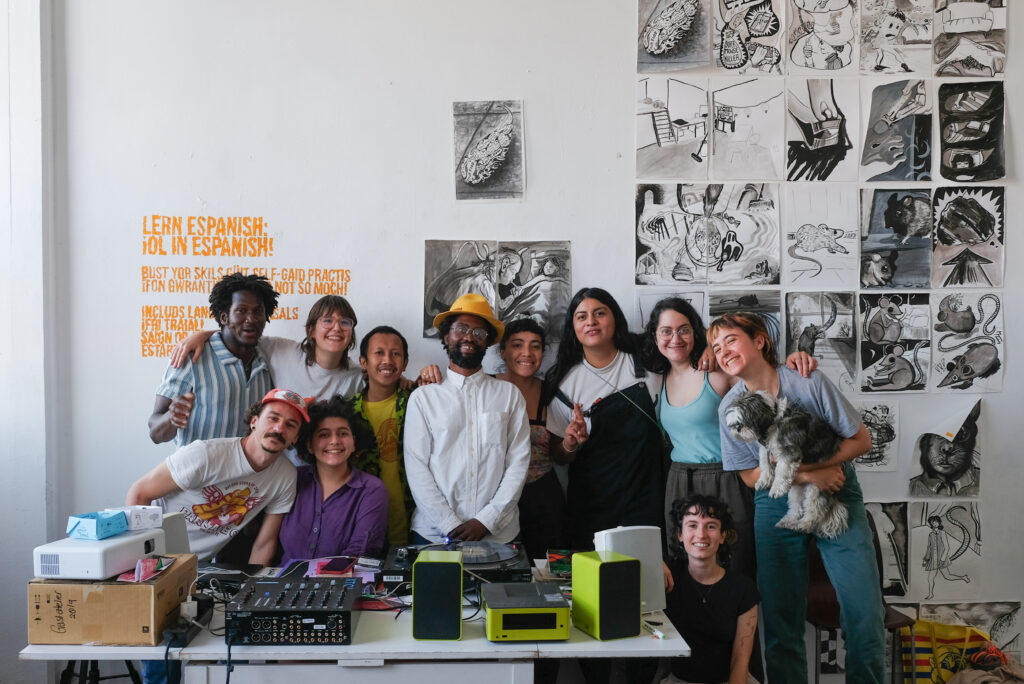
What if there were no teachers? Presentation by Ra
Keleketla! Library is a timeless, radical storytelling and narrative portal, an (arts) archive, cultural production, educational workshop, and performance space in Johannesburg and worldwide through collaborations, emergent platforms, and media.
Keleketla Library was founded in 2008 in Johannesburg. Initiated by Ra and in his brother. Ra was studying fine art and his brother marketing and advertising. Collective start in 2020 (name missed), to think about knowledge production without teachers. Educational encounters, where people bring what they have. Writing and performing hiphop as a gateway. After they needed to leave student accommodation, they found a new space.
made by people ages 9-19, thinking about historical event that took place in their new building in 1956, the building is called the drill hall.
“The neocolonial absurdity is the union of two european countries forming a union, creating this new country South Africa”.
Drill Hall was built in 1906, was the biggest hall that could house the amount of people being arrested for treason (crime against the state), so it became a courthouse in 1990s. There were 156 people, freedom fighters. The trials itself were ridiculous. The kwela car was seen as a musical instrument, because the people inside would sing and beat it like a drum. Inner city used to be a place of white capital and black labour.
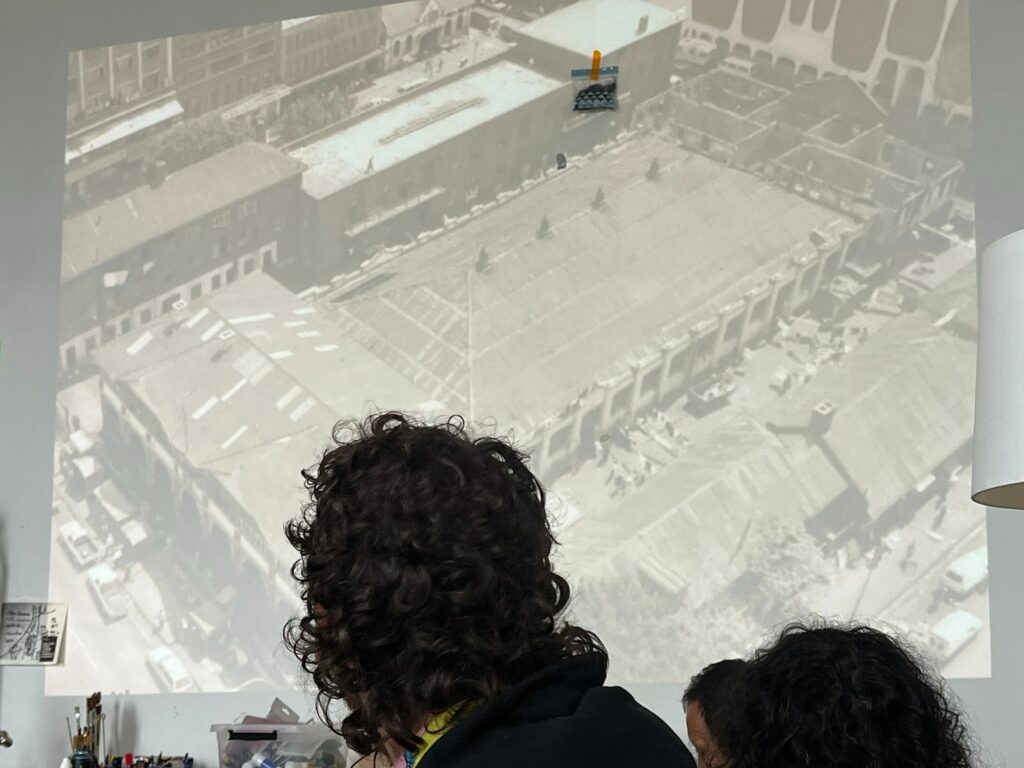
The drill hall carries this military past and liberation struggle, also occupation of homeless people, the tragedy of lost life due to neglect. The Hall was rebuilt for people to occupy in 2004. Townships were created minimum of 20 km from city centre but as for as 120 km. The history is tragic and it also continues to inspire resistance.
Moved in with their collective but they were squatting, no water or electricity account. They were collaborating with others and there were challenging to take care of the space together. Organised programs for people ages 9-19, while also putting pressure on the state to take care of the space. What does it mean to create processes of horizontal leadership? Leadership is coopted by neoliberal continued neocolonial forces.
They were thinking with the young people about how to make the history of the drill hall present. Thinking of history as linear and circular at the same time. They are sharing the space with children from colonial families. The idea of the Rainbow nation. How to go about that? What are the analytical tools and process in a place without teachers and leaders? Meeting across disciplines. Were approached by Doctors without borders for an exhibition on xenophobia, especially exiled people and refugees and access to healthcare. They created a workshop to engage xenophobia and migration.
They did a 7 week programme with high school kids, forming a choir and creating new freedom songs.
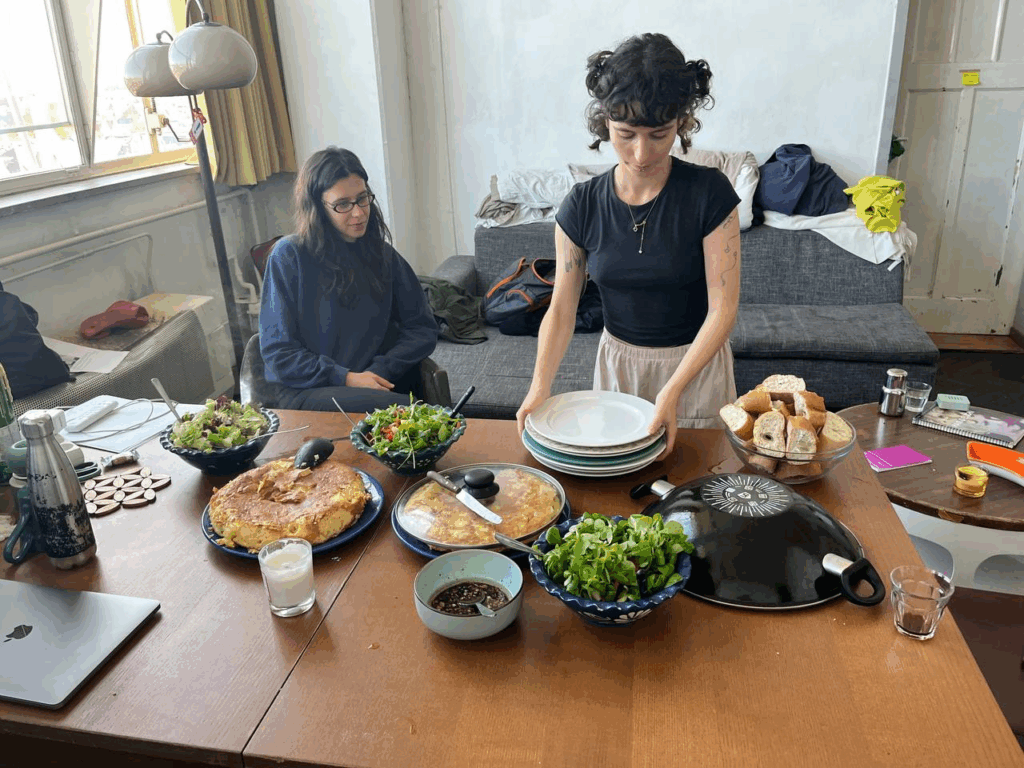
Workshop: Potential Editorial Frameworks for a Collective Zine
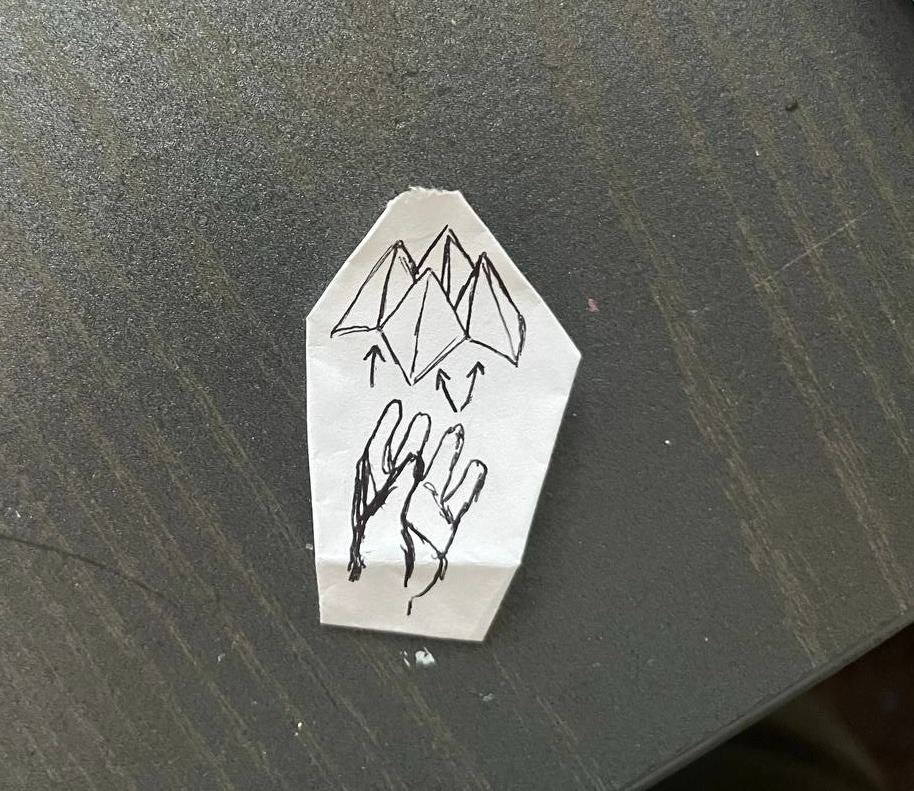
For the second part of the day, we did a zine-making workshop inspired by the paper airplanes created by the Zapatista movement. We chose Fanzine making as a method to unfold our question around printing practices, with focus on a publication for the harvest festival, as a way to dig into our archives and make something collectively. Ra also guided us to start thinking in our hf publication, and the various posibilities of editorial processes.
Learning Points for WG, Tips in the Process
What the WG learned from the question and methods they used? what worked and what did not work?
- The structure of half a day ‘lecture’/discussion and half a day of more practical workshop and making together worked really well. We were able to collectively digest what we learned in the morning through more informal reflections and discussions, while also relating it to our harvest of the year and thinking how to apply this knowledge into making something new together.
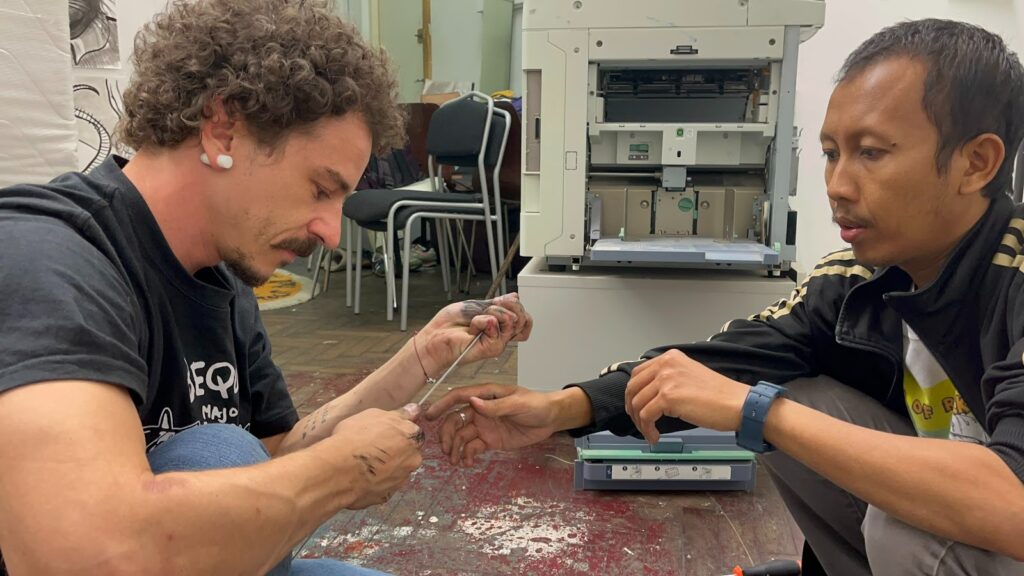
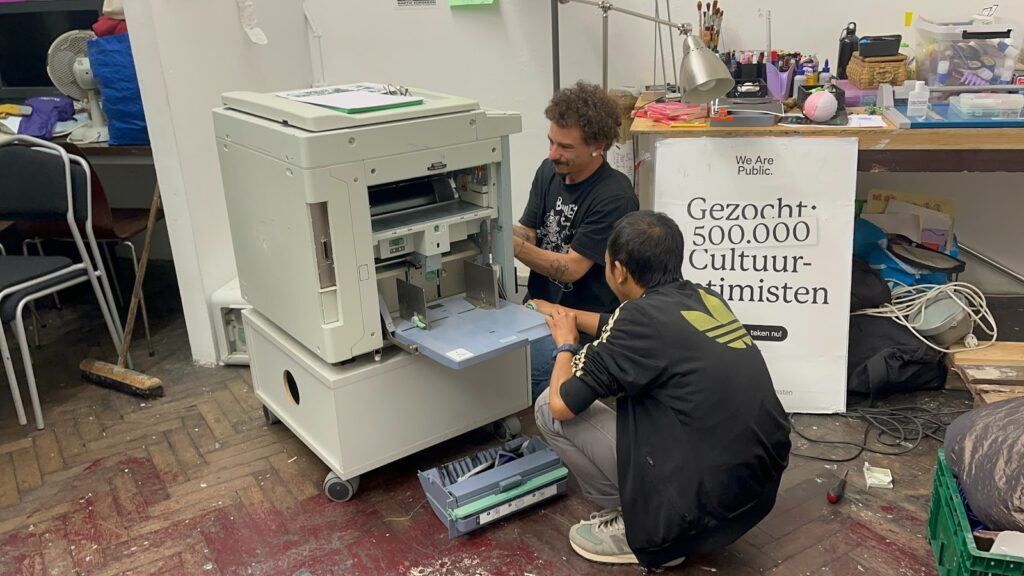
- It was nice experience organizing and preparing the printer-riso and materials, then dismantling the riso and other stuff to different place together
- It was also really nice to be in the space of M4 again, as a continuation of the Print Open Space we organized during the harvest festival. As a more informal space with many functions.
DameDame – Economy of damdam
Mapping of Funds from Institutional side and artistic side
One important aspect that we need to consider this year is, yes, MONEY! While the core of this program focuses on rethinking the economy and exploring resource-sharing networks and economy in alternative ways, we must still be aware of how the actual system operates and identify the opportunities available for us to tranvest!
During this intensive, we participated in two workshops related to this topic.
- A workshop led by Gizem Ustuner focused on writing a project plan for a funding application for an imaginary project, specifically for the Mondriaan Fund’s Artist Project.
- In another session, Sofia Patat the business director of de Appel presented on the funding ecosystem in the Netherlands, specifically for institutions. She explained how this funding system works, including various sources such as Basic Infrastructure funding, project funds, private funders, and crowdfunding, among others. The challenge is to find funding for our upcoming Harvest Festival, and Sofia advised to us based on the funding timelines, the Challenge is that we need to apply for funding by January 2026.
These two sessions served as a starting point to understand how the funding system works and to explore the potential options available for the festival.
Visit to the Black Archives
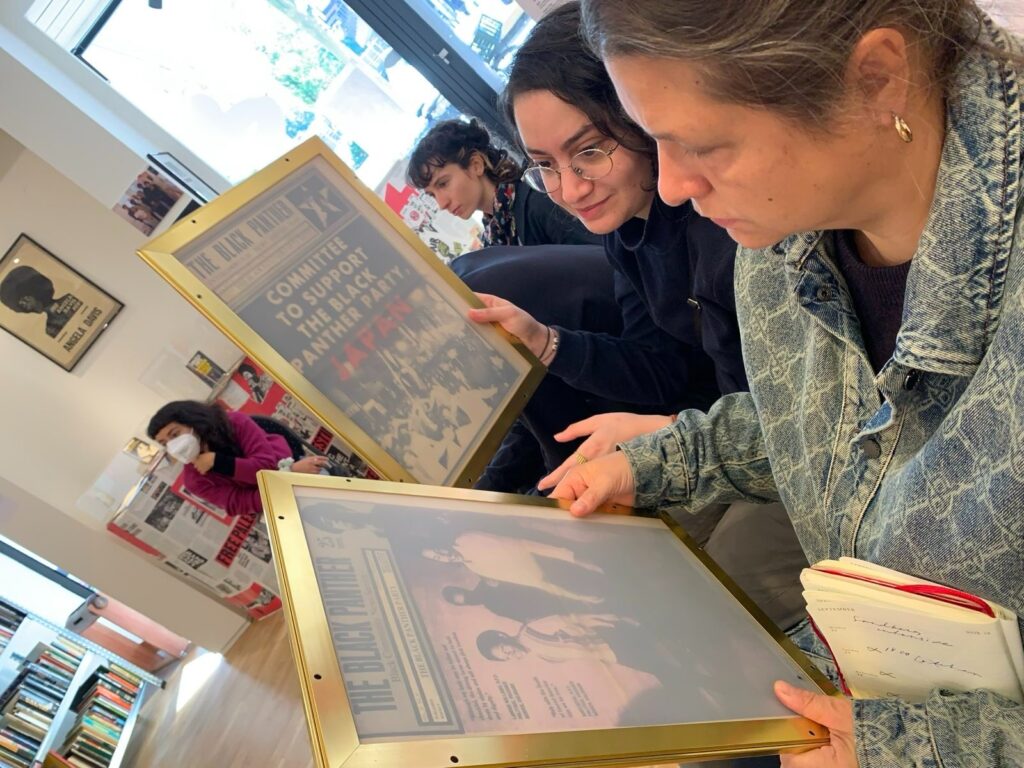
We were warmly welcomed at the Black Archives by Mitchell Esajas. Mitchell gave a presentation on how their collection of books and documents was formed. Tracing a long line of community organising by people from Surinam (who all were Dutch citizens) in the Netherlands and even links with marxist internationalism. We each chose an item from the collection and had a conversation about it. There was a reference to a short documentary (only in dutch…) on housing for people coming from Surinam to Amsterdam mostly after the independence (1975), follow the link HERE.